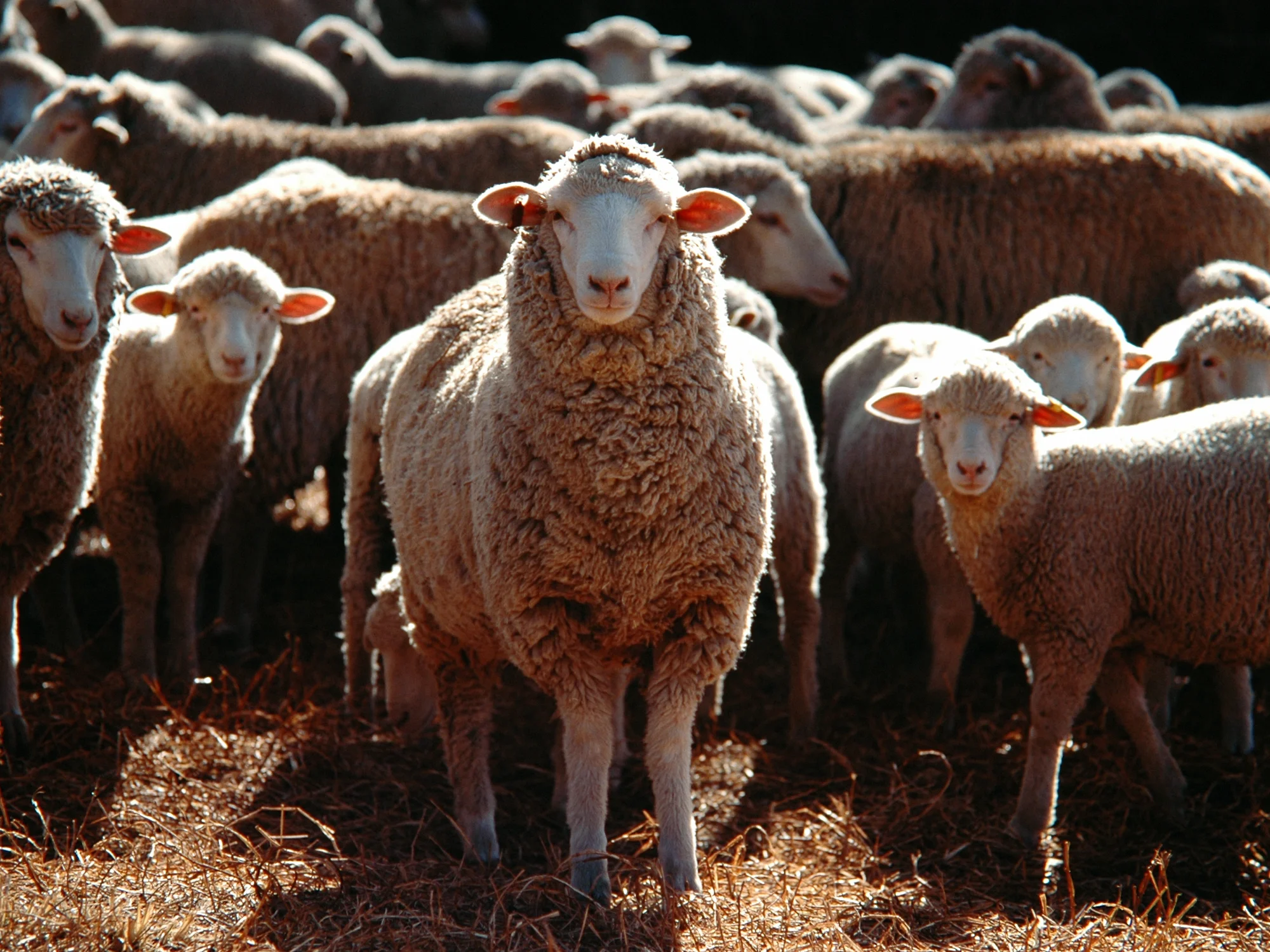
When I started my career as a graphic designer, I got rejected for the first job I ever applied for. It wasn't because I was a bad fit for the role. It was because I had the sheep mentality. Ever since I let go of that way of thinking, I have never been rejected for a single Cameroonian job I've applied for. Let me explain why.
The sheep mentality is a phrase I use to describe the reasoning of people who do things simply because they've seen other people doing them, without ever asking "why?" And in the creative industry, that mentality has produced a very specific problem: people don't actually know what creativity is. They just like using the word.
Creativity as a Reflex, Not a Definition
Ask most creatives in Cameroon to define creativity and you'll get vague, confident answers that fall apart under a single follow up question. But ask them to point at a flyer, a video edit, or a song, and they'll tell you instantly whether it's "creative" or not. That's not a definition. That's a reflex. And the reflex is trained on one thing: whatever is already familiar.
What Graphic Design Actually Is
Part of the problem is that most "graphic designers" don't actually know what graphic design is. Somewhere along the way, it got reduced to "making things look good." But graphic design was never about that. It's about communicating in a visually interesting way. Those are not the same thing. A design can be beautiful, clean, perfectly balanced, and still be a bad design if it fails to communicate what it was actually supposed to communicate. Looking good is a bonus. Communicating clearly is the job. When people confuse the two, they end up chasing aesthetics instead of solving the actual problem in front of them, and that's exactly how you get an industry full of pretty visuals that don't say anything.
Creativity Isn't a Costume
That's the real issue. Somewhere along the way, people stopped seeing creativity as a way of thinking and started treating it as a fixed set of visual rules. If a flyer isn't laid out a certain way, it's "unprofessional." If a video isn't edited a certain way, it's "not creative." If a song doesn't sound like what's already popular, it's "bad." Nobody can tell you why these rules exist. They just know the rules, and they enforce them like a checklist. That's what happens when people believe there is only one correct way to do graphic design, or make a video, or write a song. Creativity stops being a process and becomes a costume you put on correctly or incorrectly.
Proof That There's No One Right Way
Step outside Cameroon for even a moment and you'll see how untrue that is. Being part of the Super Duper mentorship hosted by James Martin introduced me to creatives like Katarina, Tamara, and Gabriela. Katarina Tamara Gabriela
All three serve the same kind of clients, offer the same kind of services, and their work looks nothing alike. None of them is doing it wrong. They're proof that "creative" was never supposed to mean one visual style. It means understanding your audience, your message, and yourself well enough to make deliberate choices, not inherited ones.
The Copycat Problem
That's exactly what's missing when a new Cameroonian brand takes off and a wave of competitors immediately starts copying their exact style, right down to the layout choices. They're not doing that because it fits their message. They're doing it because it worked for someone else, and in a market where nobody has been taught to ask why something works, "it worked for them" is treated as reason enough. The result is always the same. The copies end up looking like cheap versions of the original instead of real alternatives, because copying a style isn't the same as understanding it.
Cecilia Balemba: The Counter Example
Cecilia Balemba is the clearest counter example I've seen. The branding she made for the graphic design competition she hosted looked nothing like what Cameroonian audiences are used to, in the best way. She isn't where she is because she followed the crowd. She's there because she asks critical questions before she makes decisions, questions like: Why did that creator choose this style? Why does it work so well for them? Based on how I communicate, will it actually be a good fit for me?
Most people skip straight past those questions. They see a style working for someone else and copy it directly, and that's how you end up with an entire industry that looks like the same three references wearing different logos.
The Echo Chamber
Part of why this goes unchallenged is that a lot of creatives in Cameroon operate inside an echo chamber. They make something, show it to people who don't actually understand the craft, and call that feedback. Even then, they're only looking for praise. The moment real, critical feedback shows up, it gets dismissed as "hate speech" instead of treated as information.
AI Isn't the Threat You Think It Is
So when people say AI is going to replace creatives, I disagree with the framing. AI is going to replace people who never understood what creativity meant in the first place, people who were performing a style instead of practicing a craft. As a creative in Cameroon, it is genuinely easy to become the obvious choice for a job right now. All you have to do is the opposite of what everyone else is doing, for good reasons. Don't be a sheep. Thank you so much for reading!
— RELATED ARTICLES